Daisy Flower Coloring Page Graphics & Coloring Pages Amp
When I first opened the Daisy Flower Coloring Page file, I immediately recognized it as one of those quietly versatile assets that can anchor an entire product collection if you position it correctly. The daisy motif carries a gentle, approachable energy. It feels botanical without being stiff, decorative without being fussy, and peaceful without drifting into boredom. For a digital product creator building printables for Etsy, Amazon KDP, or a standalone Shopify store, this kind of asset solves a recurring problem: finding art that appeals across age groups and niche markets simultaneously.
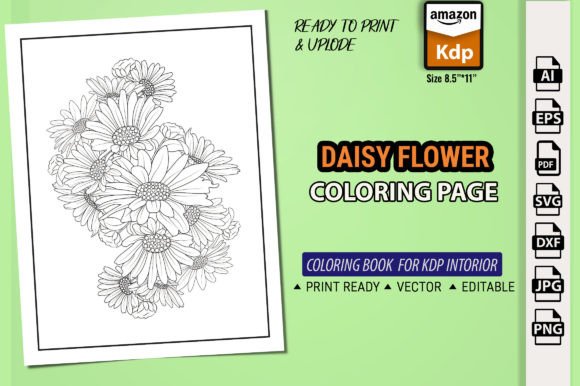
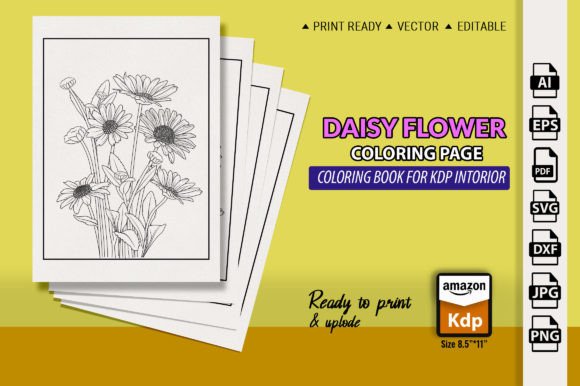
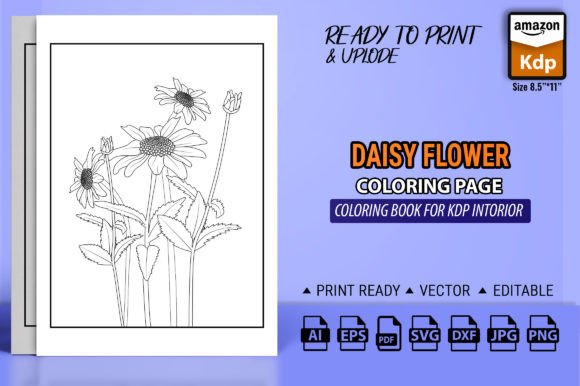
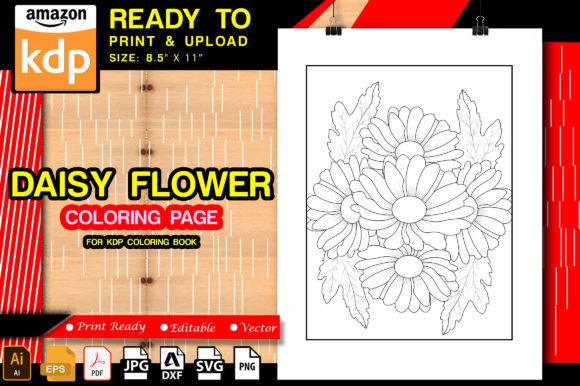
The linework in this particular design strikes a balance between detail and breathing room. It is not so intricate that a beginner colorist would feel overwhelmed, and not so sparse that an adult seeking mindfulness would scroll past it. That middle ground is harder to achieve than most sellers admit. The daisy petals have enough variation to keep a coloring session engaging, while the composition stays clean enough to work as a standalone printable or as part of a larger coloring book compilation.
From a product development standpoint, the file arrived as a single AI file with an accompanying high-resolution format. Having the vector source means you can scale, recolor, break apart elements, or adapt the line weight for different product types without losing quality. That is a practical advantage I do not take lightly, especially when preparing files for print-on-demand providers with strict resolution requirements.
First Impressions and the Mood This Design Creates
Daisies carry a universal appeal that crosses cultural and seasonal boundaries. They feel fresh in spring, nostalgic in summer, and comforting in autumn when paired with warmer palettes. The Daisy Flower Coloring Page taps into that flexibility. The illustration style feels hand-drawn with a slight organic irregularity that prevents it from looking mass-produced. That perceived handmade quality is something buyers on creative marketplaces actively seek, whether they are purchasing a finished coloring book or a single printable page for a quiet afternoon activity.
For a seller targeting the mindfulness and self-care segment, this design fits naturally alongside mandala pages, botanical illustrations, and nature-themed activity books. It also holds its own in the children's market, where floral coloring pages are consistently strong performers in categories like educational printables, party activity sheets, and classroom resources. The dual appeal means you can test the same core artwork in two distinct storefronts without cannibalizing your own sales.
Who This Asset Attracts and Why That Matters for Sales
Understanding the buyer profile helps you write better listings, choose better keywords, and design more compelling product mockups. The Daisy Flower Coloring Page tends to draw a few specific audience segments. First, there is the adult coloring enthusiast who favors floral and botanical themes over geometric or abstract patterns. This buyer often searches for terms like floral coloring book, daisy printable, nature coloring pages for adults, and botanical illustration downloads.
Second, there is the parent or educator looking for simple, engaging activities. A daisy is recognizable, cheerful, and easy for young children to color without frustration. Third, there is the craft buyer who wants to use the artwork beyond coloring. They might import the design into Cricut Design Space or Silhouette Studio to create cut files for cardstock projects, vinyl decals, or heat transfer designs. Knowing these three buyer paths means you can create listing variations, bundle offerings, and mockup styles that speak directly to each motivation.
Testing the Design Across Real Product Scenarios
Before I publish any new asset to my shop, I run it through a mental checklist of product formats. For the Daisy Flower Coloring Page, I started by visualizing it as a standalone printable listing on Etsy. A single-page PDF priced between two and four dollars, presented with a clean mockup showing the design on a clipboard with colored pencils nearby. That is the simplest entry point and often the fastest way to validate demand.
Next, I considered the Amazon KDP route. The product description for this asset mentions publishing on Amazon KDP and other marketplaces, and that is a legitimate use case. A single daisy coloring page can serve as one interior page in a larger coloring book, or it can be repeated with variations to create a themed daisy coloring book. The AI file format makes it straightforward to adjust the design for bleed, trim, and margin requirements that KDP enforces.
Beyond books, I tested the visual in a sublimation design context. The line art, when converted to a dark outline on a transparent background, becomes a clean graphic for mugs, tote bags, and t-shirts. On a white ceramic mug, a daisy outline with a soft watercolor fill creates a delicate, handmade look that performs well in gift categories. On a cream tote bag, the same design reads as understated and botanical. These are the product experiments that cost nothing to simulate but can reveal whether an asset has genuine commercial range.
Using the Daisy Flower Page in Digital Bundles and Collections
One of the most profitable strategies for coloring page assets involves bundling. A single daisy design, no matter how lovely, rarely maximizes revenue on its own. But when you curate it alongside complementary floral pages, you create a themed collection that justifies a higher price point. I would pair the Daisy Flower Coloring Page with other botanical illustrations, perhaps a wildflower set featuring lavender, chamomile, and poppy designs. The bundle could be sold as a complete coloring book interior package, a set of printable wall art, or a collection of sticker designs for planner enthusiasts.
For print-on-demand applications, the bundle logic shifts slightly. Instead of selling the digital file itself, you would apply the design to physical products and list them on marketplaces like Redbubble, Society6, or your own Shopify store. The daisy motif works well across home decor items, apparel, stationery, and accessories. A single strong design can populate an entire product line, giving your shop visual cohesion that builds brand recognition over time.
Where This Design Performs Best
After testing the asset across multiple contexts, I identified several high-confidence applications. The Daisy Flower Coloring Page excels in large-format printable products where the line detail can be fully appreciated. Printable wall art, oversized coloring posters, and full-page book interiors all showcase the design effectively. It also performs well in decorative product mockups, where the artwork serves as a preview image that communicates calm, creativity, and quality.
Social media graphics benefit from the daisy's clean silhouette. A partially colored version of the page, placed next to a flat lay of art supplies, creates a compelling Pinterest pin or Instagram post. The visual storytelling potential here is strong because coloring content naturally invites engagement and saves. For blog graphics and content marketing, the design can be used as a header image, a freebie lead magnet, or a visual element within a larger post about creativity, mindfulness, or family activities.
In Canva template creation, the daisy line art can be layered into invitation designs, greeting card layouts, and planner page backgrounds. Sellers who offer editable Canva templates often need decorative elements that feel cohesive and on-brand. A hand-drawn daisy illustration adds a personal, artisanal touch that stock vector graphics rarely achieve.
Where Caution Is Warranted
Not every product format suits this design equally well. The Daisy Flower Coloring Page includes delicate linework that can become problematic when scaled down aggressively. For tiny sticker designs, the petal details may blur or become difficult to cut cleanly. If you are creating kiss-cut sticker sheets for Cricut or Silhouette users, test the cut lines on your own machine before listing. What looks acceptable on screen may frustrate a customer who expects crisp, easy-to-weed results.
Dark backgrounds also require careful handling. The line art is likely designed for light-colored printing surfaces. If you invert the design for a dark t-shirt or black mug, the visual weight changes dramatically. I recommend testing mockups on both white and dark backgrounds before committing to a product listing. The contrast that works beautifully on a cream art print may look harsh or lost on a charcoal hoodie.
Text-heavy templates present another challenge. The daisy design is decorative and detailed. When layered behind lengthy text blocks, the visual noise can reduce readability. Use it as a frame, a corner accent, or a subtle background element rather than a full-page overlay. Preserving the design's integrity while maintaining functional clarity is a balancing act that separates professional listings from amateur ones.
Practical Seller Notes for File Preparation and Listing Quality
Before uploading any product that uses this asset, I recommend a thorough quality control routine. Start by opening the AI file and inspecting the vector paths. Check for open paths, stray anchor points, and unexpected transparency effects that could cause printing issues. Export test files in the formats your customers will need: PNG with transparent backgrounds for digital planners and sticker makers, SVG for cutting machine users, and high-resolution PDF or JPEG for printable coloring pages.
Organize the customer-facing file delivery clearly. If you are selling a digital download, include a well-labeled folder structure that separates the vector source from the raster formats. Add a simple instruction sheet explaining which file types work best for which applications. This small effort reduces customer confusion and support requests, which directly impacts your shop's review rating and repeat purchase rate.
Test the print quality at home if possible. Colors that appear crisp on screen may print with slight variations depending on ink density, paper type, and printer settings. For coloring pages, the line blackness and paper weight matter more than most sellers realize. A thin, grayish print disappoints the buyer who expected bold, satisfying outlines. Adjust the line color to a rich, true black before exporting your final customer files.
Typography Pairings That Elevate the Design
When you incorporate the Daisy Flower Coloring Page into products that include text, the font choices shape the overall brand perception. I tested several pairings and found that the daisy illustration works harmoniously with a serif font for an elegant, literary feel. A classic serif like Garamond or Baskerville paired with the botanical line art creates a vintage garden aesthetic that suits wedding invitation templates and premium stationery.
For a more modern, approachable look, a sans serif font keeps the design clean and contemporary. This pairing works well for planner inserts, digital download covers, and product mockup titles. A script font adds warmth and personality, especially for greeting card designs where the daisy motif feels personal and handcrafted. A handwritten font reinforces the handmade quality of the illustration, while a display font can create a bold focal point for product packaging or promotional graphics.
The key is to test the font with the actual artwork, not just in isolation. The daisy design carries a certain visual weight. Pairing it with a font that is too thin creates imbalance, while a font that is too heavy competes for attention. The sweet spot is a typeface that complements the illustration's organic lines without overshadowing them.
Commercial Licensing and Platform Compliance
One of the most overlooked aspects of selling digital assets involves licensing clarity. The Daisy Flower Coloring Page product description indicates it can be used for publishing on Amazon KDP and other marketplaces. Before you invest time building products around this asset, verify the specific terms of the commercial license. Can you resell the design as-is, or must it be incorporated into a new, transformative work? Are there restrictions on print-on-demand usage, or can you apply the design to physical merchandise without limitations?
Different platforms enforce different rules. Amazon KDP has specific content policies regarding public domain works, recurring content, and low-content books. Etsy requires sellers to disclose whether they are selling original designs or using third-party assets. When you use a commercial design asset like this daisy page, transparency in your product descriptions builds trust and protects your shop from policy violations.
I keep a simple spreadsheet tracking every third-party asset I use, including the purchase date, the license terms, and the platforms where I have applied the design. This habit has saved me from confusion during platform audits and when expanding product lines across new marketplaces. For a small investment of time, it provides long-term peace of mind.
Final Assessment and Strategic Recommendations
The Daisy Flower Coloring Page earns its place in a serious digital seller's asset library. It is not a flashy, trend-chasing design that will spike and fade. It is a steady, dependable illustration that appeals to multiple buyer segments and adapts to a wide range of product formats. The vector file format and the clean, well-balanced composition make it a practical foundation for building coloring books, printable collections, and merchandise designs.
For sellers who are building a seasonal product lineup, the daisy motif fits naturally into spring and summer collections but can also work in year-round evergreen niches like mindfulness, nature study, and botanical decor. The key to maximizing this asset lies in strategic product testing, thoughtful bundling, and careful attention to file preparation and listing quality. Verify your license, test your mockups, and present the design in contexts that resonate with the specific buyer you want to attract.
In a marketplace crowded with generic floral graphics, the Daisy Flower Coloring Book Pages for Adults stands out through its balanced detail and approachable charm. Whether you are publishing a digital printable coloring book, creating a Canva template for creative entrepreneurs, or designing print-on-demand merchandise for a small business, this asset provides a reliable creative starting point. The investment is modest, and the potential product range is substantial. For a working digital product creator, that combination is exactly what moves a shop from scattered experiments to a cohesive, profitable product line.