Mandala Coloring Page Vol.022: An Embroidery Review
When I first opened Mandala Coloring Page Vol.022, I immediately felt a sense of calm structure. The design carries that classic circular mandala personality—balanced, rhythmic, and deeply meditative. But as someone who spends more time around thread, stabilizer, and hoops than colored pencils, my brain immediately started translating those lines into stitches. Would this work as a machine embroidery design? Could it hold its own on a tote bag, a sweatshirt, or a personalized wedding gift? That is the real question every embroidery designer, Etsy seller, or small shop owner should ask before committing a graphic to a finished product.
This mandala is not an embroidery file out of the box. It comes from the Coloring Pages Amp category and is listed as a Graphics type. That means you are looking at a flat artwork, not a digitized stitch file. The good news is that mandalas, with their repetitive symmetry and clear linework, often translate beautifully into embroidery when digitized thoughtfully. But there are layers to that process, and I want to walk through them honestly, from the perspective of someone who has ruined a few blanks by not thinking ahead.
First Impressions and the Mood of This Mandala
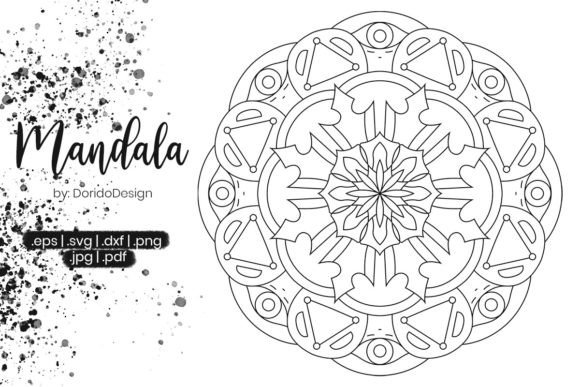
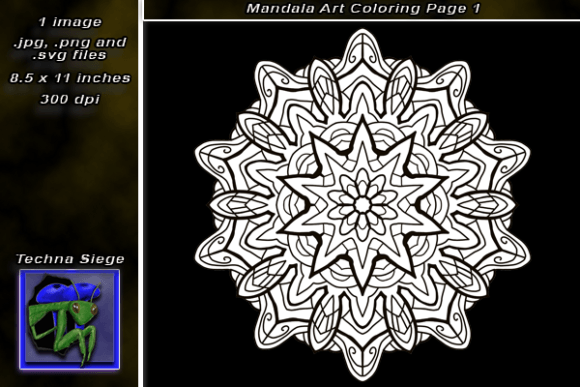
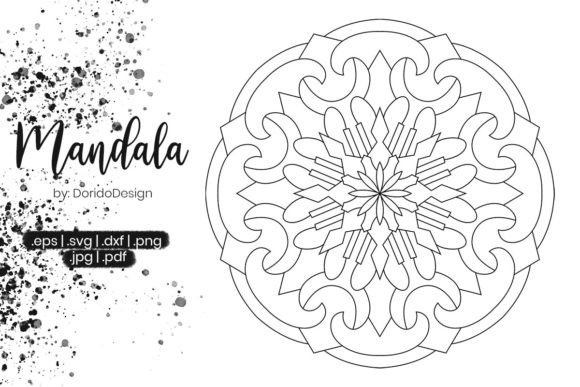
The visual personality of Mandala Coloring Page Vol.022 is refined without being overly delicate. The circular layout feels complete, like a finished piece of art that does not need any extra elements to make sense. It has that classic meditative energy, which makes it incredibly appealing for products that carry a sense of intention—think yoga accessories, mindfulness journals, nursery decor, or personalized gifts for someone going through a meaningful life transition. The symmetry is reassuring, and the detail level invites the eye to linger. That is exactly what you want in a design that ends up stitched on a pillow cover or a handmade tote bag.
From a pure graphic standpoint, the mandala feels adaptable. It is not tied to a specific season or holiday, which means it can be a year-round workhorse in your embroidery project library. The absence of text inside the design itself is a plus—it lets the stitched artwork speak on its own, and you can always add custom lettering in a hoop frame if the project calls for it.
Tote Bags and Home Decor: The Natural Fit
If I had to pick one product category that instantly feels right for Mandala Coloring Page Vol.022, it would be a sturdy canvas tote bag. The circular shape of the mandala sits beautifully centered on a flat panel, and the visual weight of a dense mandala stitch gives a boutique-quality look that customers genuinely notice. I can picture a cream-colored tote with this design stitched in a soft terracotta or dusty navy thread, and I know that combination would stop someone at a craft fair. Pillow covers, tea towels, and even simple kitchen towels would carry this design equally well. The mandala shape adds a decorative accent that feels intentional, not just slapped on.
Apparel and Personal Accessories
On apparel, things get a bit more nuanced. A sweatshirt with this mandala centered on the chest or placed on the upper back can look incredibly premium. The key is scale. If the mandala is digitized too large, it can overwhelm the garment. Too small, and those intricate details vanish into a blurry knot of thread. I would lean toward a medium placement—around seven to eight inches in diameter for an adult sweatshirt—to keep the stitching clarity crisp. For baby embroidery, a scaled-down version on a soft onesie or a tiny jacket would be adorable, but you must test how the design reads at a smaller size before stitching on a final garment.
The Real-Life Scenario: A Custom Wedding Tote Bag
Let me ground this in a real project moment. I recently had a client ask for a set of embroidered tote bags as bridesmaid gifts. She wanted something elegant, not overly floral, and meaningful enough to feel like a keepsake. I immediately thought of a mandala. When I tested Mandala Coloring Page Vol.022 as a concept, the layout worked perfectly. The center of the mandala gave just enough room for a small embroidered initial, and the outer ring framed it like a personalized seal. The finished product looked like a custom boutique piece, and the client was thrilled. That kind of versatility—where the design serves as both a standalone artwork and a frame for personalization—is exactly what a small shop owner needs to justify adding a design to their permanent collection.
Stitch Density and Detail Level
Here is where the practical designer brain kicks in. Mandalas are detail-heavy by nature. Mandala Coloring Page Vol.022 has intricate linework that, if translated directly into a satin stitch at full density, could create a stiff, bulletproof patch of thread on the fabric. Not ideal. A skilled digitizer will know where to use a running stitch for finer lines and where to apply a fill stitch to create texture without overwhelming the fabric. I always recommend testing the stitch density on a scrap piece of the same fabric you plan to use. A design that looks airy and elegant on screen can turn into a dense, uncomfortable plate on a t-shirt if no one adjusted the parameters.
Fabric and Stabilizer Choices
Your fabric choice changes everything. On a stable woven like a canvas tote or a linen pillow cover, Mandala Coloring Page Vol.022 will stitch out cleanly with a medium-weight cutaway stabilizer. On a stretchy garment, though, you need to be more cautious. A soft sweatshirt or a baby onesie will require a fusible mesh stabilizer and possibly a water-soluble topping to keep those fine mandala lines from sinking into the knit pile. I have learned this the hard way on a dark fabric project where the mandala details practically disappeared after one wash. Test on the exact fabric, in the exact color, before you commit to a batch run.
Where You Should Proceed with Caution
Every design has its sweet spots and its danger zones. For Mandala Coloring Page Vol.022, I would be careful with very small hoop sizes. If you try to cram this design into a 4x4 hoop, those delicate outer ring details will likely become illegible stitches. The same goes for curved surfaces like caps—the circular mandala shape can distort near the brim and the side seams, breaking the symmetry that makes the design so appealing. Dark fabrics also require extra attention. The mandala’s fine lines can lose contrast against deep black or navy backgrounds unless you choose thread colors that pop with intention. And on thin, lightweight fabrics, the dense center of a mandala stitch can cause puckering that ruins the professional look of a finished product.
The Visual Impact on Finished Products
When stitched well, Mandala Coloring Page Vol.022 adds a layer of visual sophistication that elevates a simple blank into a handmade product people want to pick up and touch. There is a reason mandala designs consistently perform well in Etsy listings and craft fair booths. They signal care, artistry, and a sense of completeness. For a small business owner, that translates directly into higher perceived product value and stronger customer trust. A mandala-embroidered tote bag does not look like a rushed print-on-demand item. It looks like a considered piece, and buyers notice that difference. The design also photographs beautifully, which is a huge advantage for online sellers who rely on printable mockup images and clean product shots to attract buyers.
Practical Designer Notes Before You Stitch
Before you take Mandala Coloring Page Vol.022 into a commercial embroidery project, here is the checklist I run through every time. First, confirm the licensing terms. The product description mentions uses like scrapbooks, greeting cards, stickers, and invitations, but you need to verify whether the license allows you to create and sell finished embroidered products or digital embroidery files. Do not assume—check. Second, test the design on scrap fabric first, especially if you are digitizing the graphic yourself. Play with thread color contrast. A mandala that looks gorgeous in black ink on white paper might need a completely different thread palette to read well on a natural linen or a dusty pink sweatshirt. Third, inspect the small details after stitching. If the inner rings lose definition, you may need to adjust the stitch type or scale. Fourth, always use the correct stabilizer for your fabric, and consider a topper for textured or dark fabrics. Fifth, test the design in both color and black-and-white mockups to see how it holds up across different product photography styles. Finally, if you are an Etsy seller or a craft business owner, think about how Mandala Coloring Page Vol.022 fits into your brand consistency. Does it match your aesthetic? Could it become a signature piece that buyers recognize as yours?
Final Thoughts from the Embroidery Perspective
Mandala Coloring Page Vol.022 is a strong graphic candidate for machine embroidery, but it is not a plug-and-play file. It requires a thoughtful transition from flat artwork to stitched design. For embroidery designers, small business owners, and creative entrepreneurs who are willing to put in that digitizing work and test carefully, the payoff is a design that feels timeless, versatile, and genuinely marketable. I would use it again on tote bags, pillow covers, and personalized wedding gifts without hesitation. I would also keep it in my back pocket for holiday embroidery projects where a meditative, meaningful design fits the mood better than another reindeer or snowflake. If you approach it with respect for the craft and a willingness to test, this mandala can become a quiet star in your embroidery project lineup.