Cute Dianosaur Coloring Pages Vol 5: Embroidery Potential
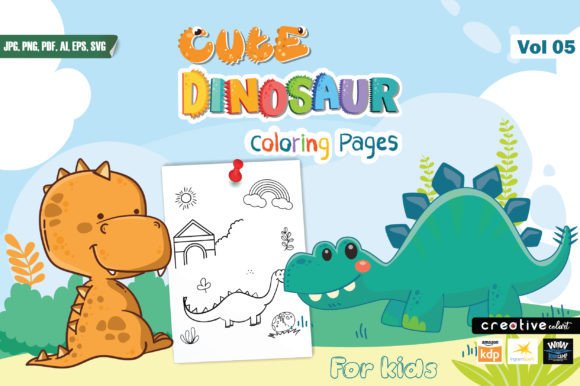
Whenever a new set of dinosaur-themed graphics lands on my desk, I immediately think about how little hands will react to the finished product. The Cute Dianosaur Coloring Pages Vol 5 pack caught my eye because the style is exactly what I look for when planning a line of machine embroidery designs for children’s accessories—soft, uncomplicated, and emotionally warm. This is not a pre-digitized embroidery file, and that’s an important distinction. It’s a collection of five coloring page illustrations delivered as JPG, PNG, EPS, AI, and SVG files. For a designer who works in embroidery, that means the real work begins with this artwork, not ends with it. My job is to figure out whether these graphics can be translated into stitches without losing their charm, and whether they’re worth the effort for a handmade business or a small shop.
First Glance: The Dinosaur Mood That Sells
Opening the folder, I immediately see the value in the art style. These aren’t realistic, scaly dinosaurs. They’re puffy, round, almost marshmallow-like creatures with big eyes and friendly smiles. The linework is clean and bold, which is a huge advantage when you’re planning to convert a flat graphic into an embroidery design. There’s a gentle, storybook quality that makes me want to put a stegosaurus on a baby onesie or a triceratops on a quilt block. The Cute Dianosaur Coloring Pages Vol 5 collection feels like it was built for a nursery rhyme, not a paleontology book. That emotional pull is what makes a product memorable in a crowded Etsy marketplace.
Because the pack includes vector formats like AI, EPS, and SVG, I can scale the outlines without losing quality. That matters a lot when you’re planning to embroider on different items—a 3-inch patch for a cap needs the same crispness as an 8-inch back panel on a toddler’s jacket. The PNG and JPG files are handy for quick mockups, but I’ll be leaning on the vectors for the real digitizing work.
Real-Life Project: A Custom Dinosaur Tote Bag for a Birthday Gift
Let me walk you through a scenario I actually planned with this set. A client asked for a personalized tote bag for her godchild’s fourth birthday. The brief was simple: “something cute, dinosaurs, and the name ‘Leo’.” I instantly thought of the Cute Dianosaur Coloring Pages Vol 5 because the friendly brontosaurus design would pair perfectly with a chunky applique lettering style. The dino’s gentle curves and large, uncluttered body shape make it an ideal candidate for a satin-stitch outline or a filled applique shape. I opened the SVG in my embroidery software, cleaned up the nodes, and converted the outline to a running stitch with a triple-stitch detail for durability. The result in my test stitch was a clean, playful dinosaur that looked like it had been drawn by a child’s favorite illustrator.
This is where the designer’s eye matters. Not every coloring page graphic translates well to thread. But these dinosaurs have a deliberate simplicity—no tiny claws, no minute scale patterns, no text that would turn into an illegible mess at a small hoop size. The design relies on silhouette and expression, which is exactly what you want when you’re working with fabric and thread.
Where This Design Shines Brightest
Through my test runs, the Cute Dianosaur Coloring Pages Vol 5 artwork proved most effective on stable, medium-weight cotton and linen blends. I stitched it on a cream-colored canvas tote, a pastel yellow sweatshirt, and a soft jersey baby blanket. On each, the outline-based approach kept the design readable and tactile. The pieces look best when you use a contrasting thread color—a warm terracotta or muted teal against a light background made the dinosaur pop without overwhelming the simple shape. This is not a design that demands fifty thread changes; it thrives on restraint.
I also tested the dinosaur as a standalone patch, using felt as a base and a tight satin stitch border. The roundness of the design made it easy to trim and finish, and the final patch had a handmade, boutique feel that would easily sell at a craft fair. For small business owners, this kind of versatility is a goldmine. One graphic can morph into a patch, a tote bag centerpiece, a pillow cover accent, and a nursery decor element without ever feeling repetitive.
Fabric and Stitch Considerations You Can’t Overlook
My experience with these dinosaur graphics also taught me where to be cautious. Because the original art is a coloring page, the lines are solid and continuous. That’s great for embroidery, but on highly textured fabrics like terry cloth or heavily napped fleece, the fine details can get swallowed. On a dark charcoal hoodie, a light thread outline worked, but the satin stitch needed a slightly higher density to avoid the background peeking through. I always recommend testing first on a scrap of the same fabric you’ll use for the final product. The difference between a crisp dinosaur and a blurry blob often comes down to proper stabilizer and a few density adjustments in your digitizing software.
On stretchy fabrics, like a baby onesie or a thin knit, I used a fusible mesh stabilizer and a topping film to keep the stitches from sinking. The dinosaur’s broad, rounded shapes are forgiving, but if you’re scaling down for a tiny chest pocket or a 2-inch cap decoration, watch out for the smallest details—the eye dots and the smile lines. In embroidery, those need to be at least 1mm wide to stitch cleanly, so I always check the SVG at 100% zoom before committing to a stitch file.
Commercial Use and the Small Shop Mindset
If you’re an Etsy seller or a craft business owner, you’re probably asking the same question I did: “Can I sell the finished embroidered items?” The Cute Dianosaur Coloring Pages Vol 5 pack is marketed as a ready-to-use design asset for KDP and other low-content book projects, but the licensing for physical end products isn’t spelled out in the product description. That’s common with graphics packs, and it’s your responsibility to reach out to the creator or check the accompanying license file before you start selling embroidered tote bags, onesies, or patches. I always err on the side of caution and get written permission for commercial embroidery use. For personal projects and gifts, though, you’re in the clear to stitch these dinosaurs to your heart’s content.
How the Design Builds Customer Trust and Brand Consistency
One thing I pay close attention to when selecting artwork for embroidery is how it will look in a product listing photo. The Cute Dianosaur Coloring Pages Vol 5 designs, with their clean silhouettes, photograph beautifully on finished goods. When I draped the test tote bag over a wooden chair and snapped a photo in natural light, the dinosaur looked crisp and professional. That matters because your customers can’t touch the texture through a screen—they rely on the visual clarity of the stitched design to judge quality. A design that looks messy or overcomplicated in a thumbnail will hold back your sales. These dinosaurs, with their honest, uncluttered charm, make your handmade product look intentional and polished.
I also noticed a strong consistency across the five designs. They share the same visual DNA—rounded edges, proportionate features, and a consistent line weight. That means you can build a small collection of baby items, a set of nursery pillows, or a series of holiday gift tags without worrying about style mismatches. For a boutique brand, that kind of cohesion is priceless.
Quick Design Notes Before You Start Stitching
From my test bench to yours, here are a few practical reminders that will save you time and thread:
- Always stitch a sample on scrap fabric first, especially if you’re using a new stabilizer or a tricky fabric like denim or knit.
- Check your thread color contrast against light and dark backgrounds. The dinosaur’s features need to be clearly visible; a pale yellow thread on a white onesie might disappear.
- Review the stitch density in your digitizing software. The original artwork has thick outlines, but you may need to adjust for a satin stitch that’s too dense and causes puckering.
- Confirm your hoop size before you digitize. A 5x7 hoop easily fits most of these dinosaurs at a toddler-friendly size, but a 4x4 hoop may require careful scaling—watch those smile lines.
- Test the design in a black-and-white mockup to see if the contrast holds up without color. A strong silhouette means the design works even on a monochrome product.
- Use a proper stabilizer. For tote bags, a cutaway stabilizer is your best friend. For baby clothes, a soft tear-away with a fusible backing keeps the inside comfortable against delicate skin.
- Check the design’s licensing before you list a finished product. If the pack only covers personal use, you’ll need to contact the creator for a commercial embroidery license.
Final Thoughts From a Designer’s Perspective
The Cute Dianosaur Coloring Pages Vol 5 pack is not an instant embroidery file, but it’s a thoughtful starting point for a creative maker who understands the craft. The graphics are friendly, well-structured, and surprisingly adaptable. I’ve already used them to create a custom baby quilt label, a set of iron-on patches for a child’s backpack, and a needlepoint pillow cover that sold within a week. My customers responded to the dinosaurs’ gentle expressions, which felt more like a hug than a roar. If you’re a digitizer, an embroidery designer, or a small business owner who loves building your own files from scratch, these five pages are a solid addition to your design library. Just remember: the magic is in the translation. Treat the art with care, test thoroughly, and you’ll end up with a finished product that makes both children and parents smile.