200 Flowers Tree: An Embroidery Designer's Review
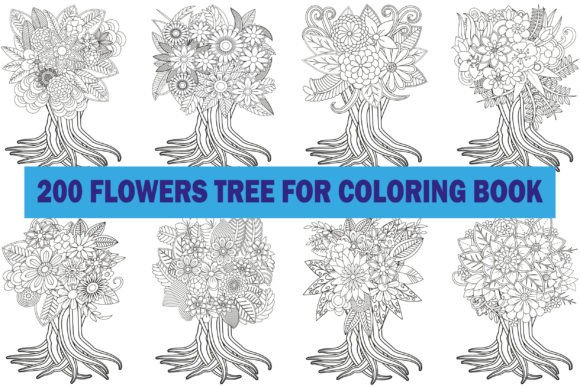
I've spent years testing digital artwork for embroidery conversion, and I'll be honest—most coloring page designs never make it past a quick glance. But the 200 Flowers Tree for Adult Coloring Book bundle stopped me mid-scroll. There's something about a tree built from two hundred individual flowers that immediately sparks project ideas. If you're a machine embroidery designer, a craft business owner, or an Etsy seller looking for fresh design assets, this one deserves a closer look.
First Impression: A Tree That Feels Both Calm and Alive
Opening the bundle, the mood hits first. The 200 Flowers Tree isn't a stiff botanical diagram. It reads like a quiet, hand-drawn illustration where each flower cluster contributes to the canopy's shape. The layout leans organic, with blooms varying in size and density across the branches. That natural unevenness is actually a gift for embroidery. Designs that feel too perfectly symmetrical often look flat after stitching. This one has built-in movement. The trunk provides a solid anchor, while the flower-heavy crown gives the eye plenty to explore. For a handmade product, that kind of visual rhythm keeps customers looking twice.
I immediately pictured it on a natural linen pillow cover. The contrast between the textured fabric and a densely stitched tree would feel like something you'd find in a boutique home goods shop. That's the test I always run in my head: does the design have enough personality to carry a finished product on its own? This one does.
Stitching the 200 Flowers Tree on a Custom Tote Bag
Let me walk you through a real scenario. A client recently asked me about a personalized tote bag design for a wedding party gift. She wanted something botanical, not overly romantic, and usable long after the event. The 200 Flowers Tree for Adult Coloring Book came to mind. I tested a converted version of one tree design on a medium-weight cotton canvas tote using a 5x7 hoop. The flower details translated surprisingly well at that size, though I did need to simplify the smallest blooms slightly to keep the satin stitch edges crisp. The fill stitch on the trunk held up beautifully against the canvas weave, and the overall shape read clearly from a few feet away—exactly what you want for a bag that gets carried around in public.
The client loved the sample. She ended up ordering twelve totes with the tree design and each bridesmaid's name added below. That's the kind of project where a design like this shines. It's versatile enough to feel personal without being niche, and it photographs well for social media, which matters if your customers share their purchases online.
Where This Design Works Best in a Craft Business
I've mentally placed the 200 Flowers Tree on a dozen different products, and here's where it genuinely fits:
- Tote bags and market bags — The tree's rounded canopy shape fills the space naturally without fighting the bag's proportions.
- Sweatshirt and t-shirt embroidery — On a crewneck or a relaxed-fit tee, the design adds a handcrafted focal point that doesn't scream mass production.
- Pillow covers and tea towels — Especially on oatmeal or unbleached cotton, the stitched tree takes on a warm, homey feel that sells well at craft fairs.
- Nursery decor and baby blankets — The floral tree motif reads as gentle and nature-inspired, perfect for a child's room without being overly cartoonish.
- Embroidered patches — If you scale the design down carefully, it makes a beautiful standalone patch for jackets, aprons, or caps.
- Holiday gifts and personalized keepsakes — Add a name or a date, and the tree becomes a commemorative piece for weddings, anniversaries, or Mother's Day.
- Etsy listings and printable mockups — The 200 Flowers Tree for Adult Coloring Book bundle also works as a digital product preview asset. Sellers can use it in mockups to showcase embroidery styles without stitching every sample.
When to Be Cautious With the 200 Flowers Tree
Not every design suits every project, and I always tell fellow makers to think about the fabric and the hoop size before committing. Here's where the 200 Flowers Tree needs extra care:
Small hoop sizes — If you squeeze the tree into a 4x4 hoop, the individual flowers may lose definition. The stitch density can get too tight, and the satin stitch edges might pucker. I'd recommend testing one flower cluster at your intended size before running the full design.
Stretchy or thin fabrics — Jersey knits and lightweight blends can shift under dense fill stitching. Use a sturdy cut-away stabilizer and consider a topper if the fabric has a nap, like fleece or French terry. I learned this the hard way on a thin modal sweatshirt where the tree's trunk detail pulled slightly after washing.
Dark fabrics — The tree's fine flower outlines may not pop on black or navy without light thread colors. Always test your thread palette on the actual fabric. A soft cream or pale pink on charcoal cotton can look stunning, but only if the contrast is strong enough to show the individual blooms.
Curved surfaces like caps — The tree's width and rounded top can be tricky on a structured cap's front panel. You might need to arc the design or choose a flatter placement area. The same goes for small zipper pouches where the seam allowance eats into the stitching field.
Frequent washing — If the finished product is a kitchen towel or a baby bib that gets washed often, consider how the flower details will hold up over time. A denser fill stitch on the trunk is fine, but the finer petal lines might wear faster. I'd reserve this design for items that get gentle or occasional washing.
How the Design Affects Customer Perception and Sales
When a buyer scrolls through an Etsy shop or a craft fair booth, they react to images before they read a single word. The 200 Flowers Tree has an immediate advantage: it looks like something an artist drew, not a generic stock graphic. That perception of uniqueness builds trust. Customers feel like they're buying a thoughtfully made product, not a mass-produced item with a slapped-on logo.
For branding, the tree motif carries associations with growth, nature, and calm. If your shop leans into botanical, mindful, or slow-living aesthetics, this design reinforces that identity. I've seen similar tree designs used successfully on boutique clothing tags, packaging inserts, and even as a small embroidered detail on the inside of a garment hem. Those subtle touches stick in a customer's memory.
From a practical standpoint, the bundle's volume—200 variations—means you can offer a series of products without repeating the exact same design. One tree might become a tote bag, another a pillow cover, another a sweatshirt. The cohesion across your product line strengthens your brand without feeling monotonous.
Practical Designer Notes Before You Stitch
I keep a mental checklist for every new design I test, and I recommend you do the same with the 200 Flowers Tree for Adult Coloring Book:
- Test on scrap fabric first. Run the design on a piece that matches your final product's weight and texture. Cotton canvas and jersey knit behave very differently under the same stitch density.
- Check thread color contrast. Hold the spool against the fabric in natural light. What looks vibrant on the rack might disappear or clash once stitched.
- Review stitch density. If the converted file feels too dense, adjust it before production. Overly dense stitching causes puckering and thread breaks.
- Confirm your hoop size. Measure the design's actual stitch area, not just the file dimensions. Some designs have a larger footprint than expected.
- Inspect small details. Zoom in on the tiniest flowers. At 100% view, can you still see the petal separations? If not, they won't stitch clearly.
- Test in black and white. A quick grayscale mockup reveals whether the design's value contrast holds up without color. This matters for single-color embroidery projects.
- Compare light and dark backgrounds. The same tree can look airy on cream linen and heavy on charcoal denim. Know which version you're selling.
- Use proper stabilizer. Cut-away for knits, tear-away for wovens, and always a topper for textured fabrics. Don't skip this step.
- Check licensing before selling. The product description mentions use for KDP Interior, POD products, and book cover design. If you plan to stitch the design onto physical items for sale, confirm that the license covers commercial embroidery and finished product sales. This is a Coloring Pages Amp and Graphics product, so verify the terms with the seller.
Why This Design Earns a Spot in Your Asset Library
I don't keep designs that only work in one context. The 200 Flowers Tree for Adult Coloring Book passes the versatility test because it adapts to apparel, home decor, gifts, and digital products without feeling forced. The hand-drawn quality gives it staying power beyond trends, and the sheer number of variations means you can build a whole collection around the tree motif.
For embroidery designers, the real value lies in the design's adaptability. You can use it as a standalone focal point, pair it with lettering, or deconstruct parts of the tree for smaller accents. A single flower cluster from the canopy could become a delicate collar detail on a blouse. The trunk could serve as a border element on a set of napkins. When a design gives you that many options, it stops being a single project piece and becomes a toolkit.
Small business owners and Etsy sellers will appreciate the marketability. Botanical designs consistently perform well in handmade and personalized gift categories. The tree shape feels gender-neutral and age-inclusive, so you're not limiting your customer base. And because the 200 Flowers Tree for Adult Coloring Book originates from a coloring page aesthetic, it carries a creative, artisanal vibe that resonates with buyers looking for something beyond standard embroidery patterns.
Final Thoughts From the Worktable
I've tested hundreds of designs over the years, and the ones I return to all share a few qualities: they stitch cleanly, they photograph beautifully, and they make customers feel something. The 200 Flowers Tree checks those boxes. It's not the simplest design you'll embroider, and it demands attention to fabric choice, stabilizer, and thread selection. But the finished product has a quiet, handcrafted presence that stands out in a crowded market.
If you're building inventory for a craft fair, refreshing your Etsy shop, or designing a custom gift that needs to feel genuinely special, pull one of these trees into your embroidery software and run a test. Start with a linen tea towel or a sturdy cotton tote. Watch how the light hits the stitched flower petals. See how the tree's shape fills the space without overwhelming it. That's when you'll know whether this design belongs in your regular rotation. For me, it earned its place.